Institute to End Mass Incarceration
A quietly compelling website conveys IEMI’s mission to eradicate mass incarceration in the United States.
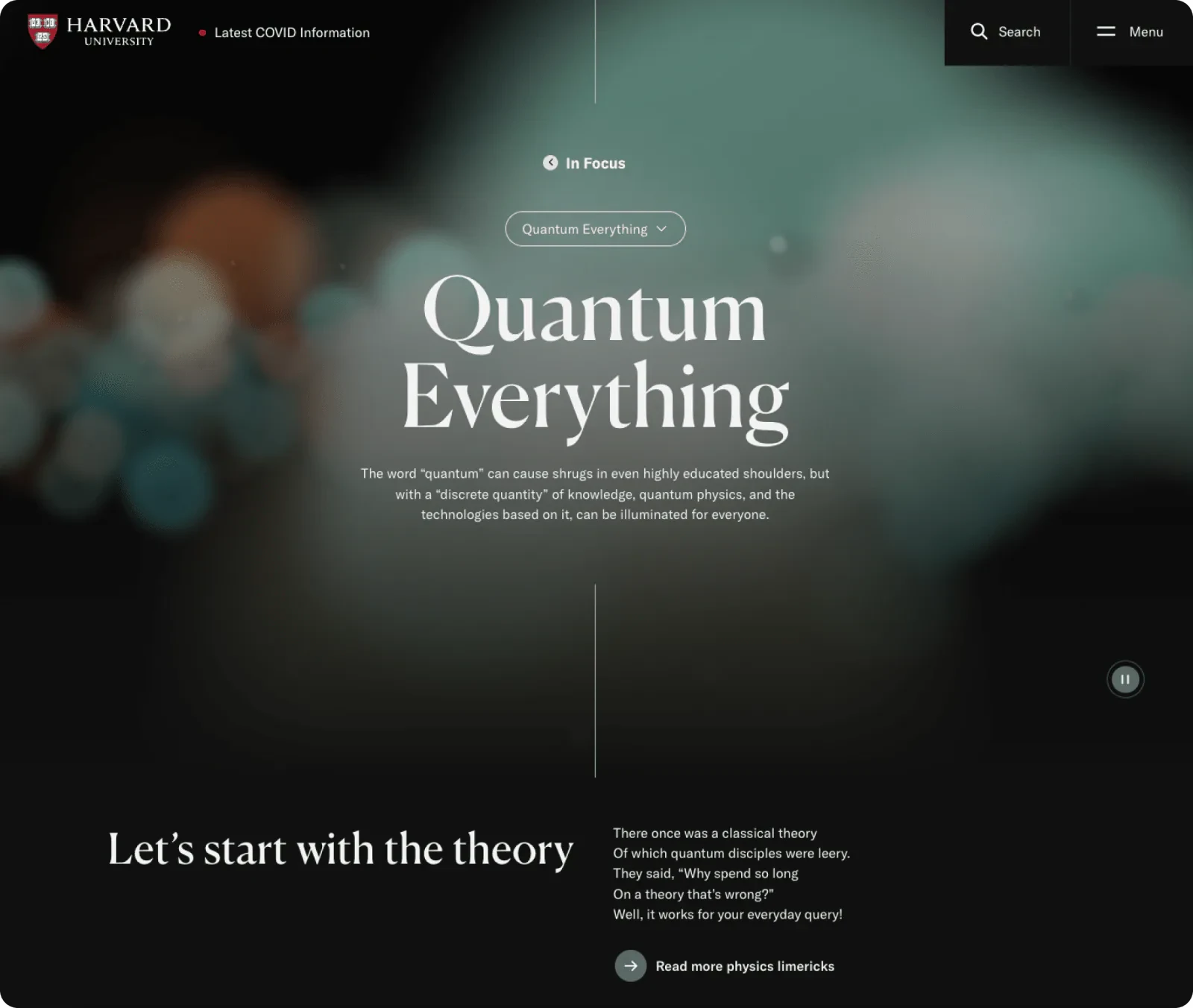
Our Webby Award-winning flagship website for Harvard University marries forward-thinking design and a streamlined navigation to create an original, impactful user experience.
We empower people and platforms with work that really works — custom websites and applications, open source digital products, and more

A quietly compelling website conveys IEMI’s mission to eradicate mass incarceration in the United States.
A reimagined digital platform helps data.org share news, thought leadership, initiatives, and stories of impact.
Over 11 years, the #1 calendar for WordPress grew into a standalone business staffed by a team of 60+.
A centralized hub site with a future-proof look and feel powers the vast digital ecosystem for this storied institution.
A bold, accessible new platform supports Boise State’s 100+ sites and injects the university’s Bronco energy into their online presence.
A 10-year collab with the world’s largest furniture manufacturer produced a robust multisite used by employees and customers around the globe.
Modern Tribe partnered with the team at Kadence WP to design and engineer Kadence AI, a revolutionary tool integrating with OpenAI to simplify and supercharge the process of creating WordPress websites.
At Modern Tribe, we emphasize understanding our clients’ needs to deliver successful enterprise WordPress products. Our stakeholder interview process, honed over nearly two decades launching digital projects across diverse sectors, is integral to our discovery phase, and ensuring that what we build meets client objectives. This article provides insights into our approach and highlights the […]
November 9 is World Usability Day, an annual event uniting global communities of professional, industrial, educational, citizen, and government groups for a common objective: ensuring the services and products important to life are easier to access and simpler to use. To mark the occasion and show our support for inclusion through user experience, we’re excited to […]
With growing digital competition, it’s crucial to create web experiences that connect with target audiences—that’s where user testing comes in.
Who we work with
From Fortune 500 companies and Ivy League institutions to global retailers and world-changing non-profits, our clients have a couple things in common: big challenges and even bigger aspirations.


